


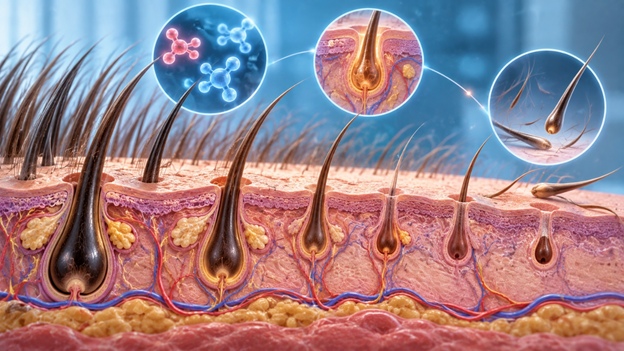
Hair Loss in Women: Common Causes and When It May Indicate an Underlying Condition
Hair loss in women is common, but its underlying cause can vary considerably. Some forms are temporary, whereas others represent progressive conditions that require appropriate clinical assessment.
Female pattern hair loss is among the most common causes and typically presents as progressive thinning or widening of the central hair part. Increased shedding may also occur after childbirth, significant illness, surgery, or substantial weight loss.
Other potential contributors include thyroid disease, confirmed nutritional deficiencies such as iron deficiency, and hormonal disorders including polycystic ovary syndrome. Repeated tension from tightly pulled hairstyles can also cause traction alopecia.
Sudden, well-defined patches of hair loss may indicate alopecia areata, an autoimmune disorder that affects hair follicles and differs from hereditary pattern hair loss.
Accurate diagnosis is essential because treatment depends on the underlying cause. Assessment typically considers the pattern and duration of hair loss, scalp findings, medical history, and relevant symptoms. Blood tests or additional investigations may be appropriate when a nutritional, hormonal, autoimmune, or other medical cause is suspected.
Routine supplementation is not an appropriate substitute for diagnosis. Iron, zinc, and other supplements should generally be used to correct a demonstrated deficiency rather than taken indiscriminately for hair loss.
Leave a reply